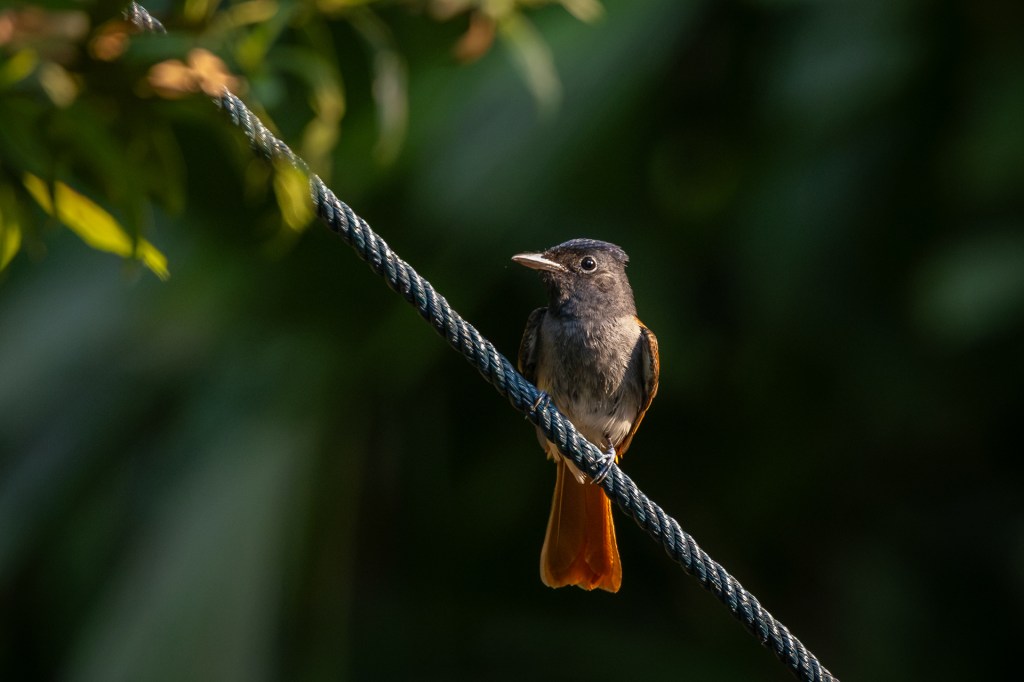
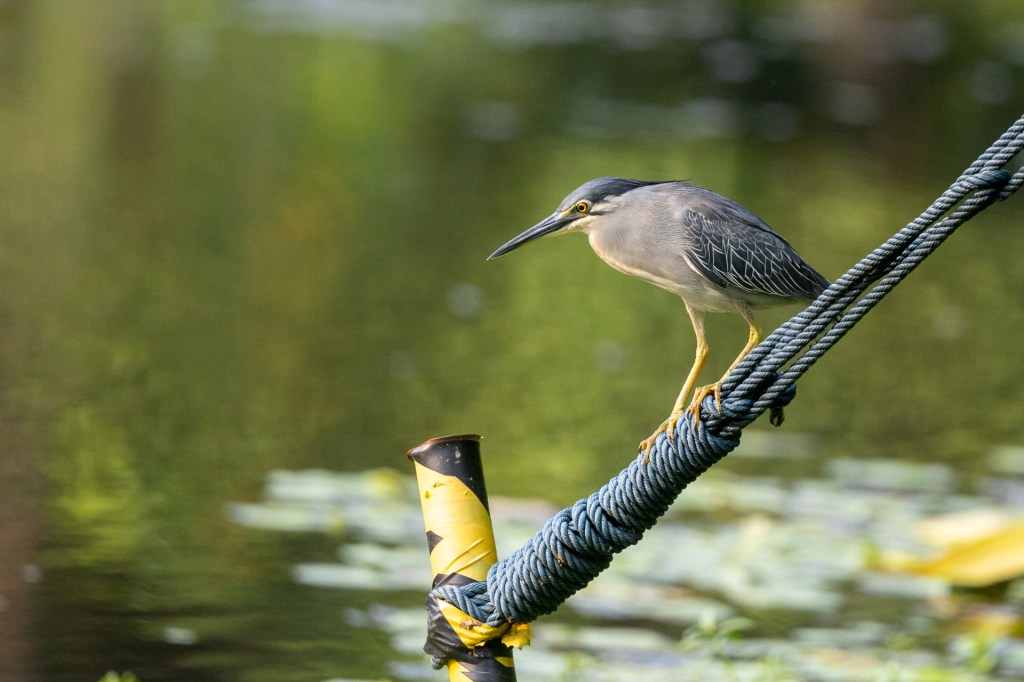
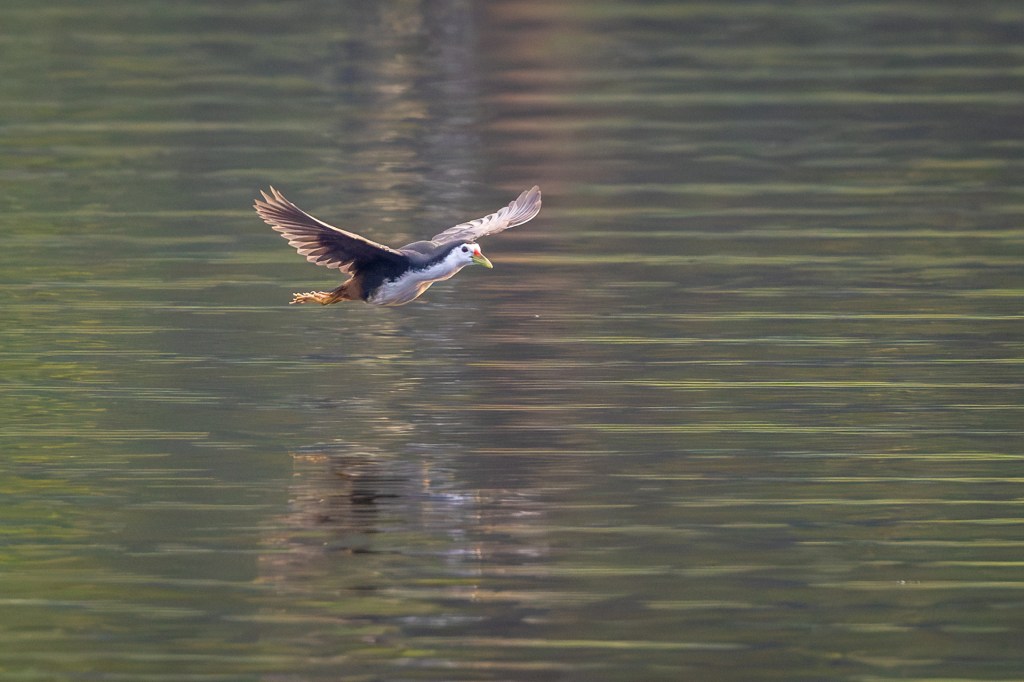
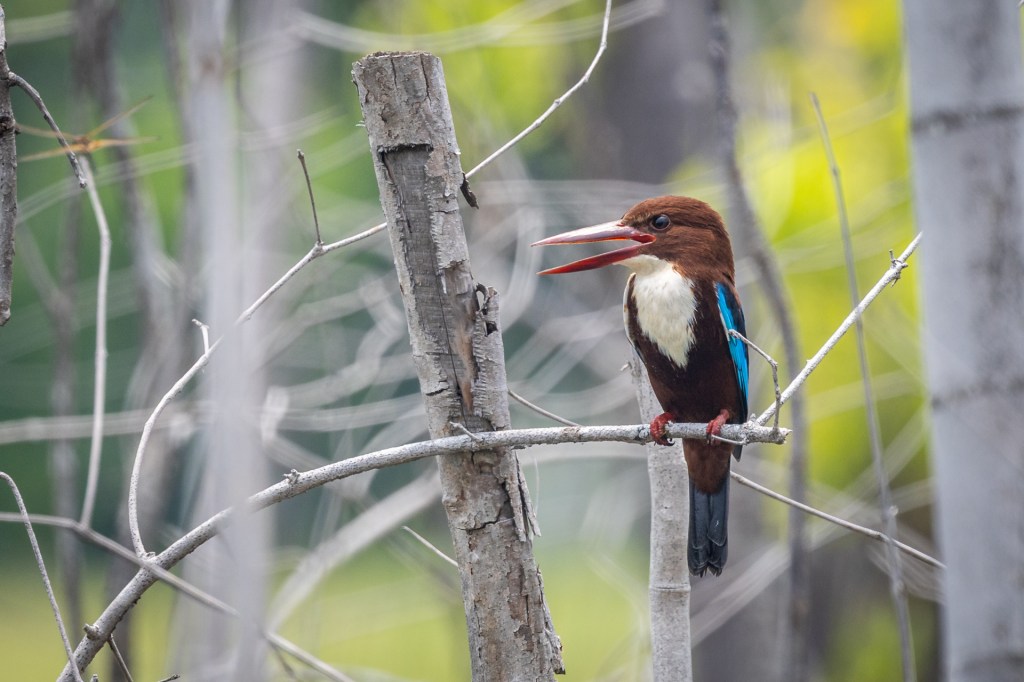
It’s been 2 months since I last went out to bird. I’ve been using the time for personal commitments and to revisit another past hobby, reading (don’t get me started on the crazy hot weather of late). Nevertheless, I thought it’d be nice to just spend a few hours for some casual birding at my favorite “backyard” today.
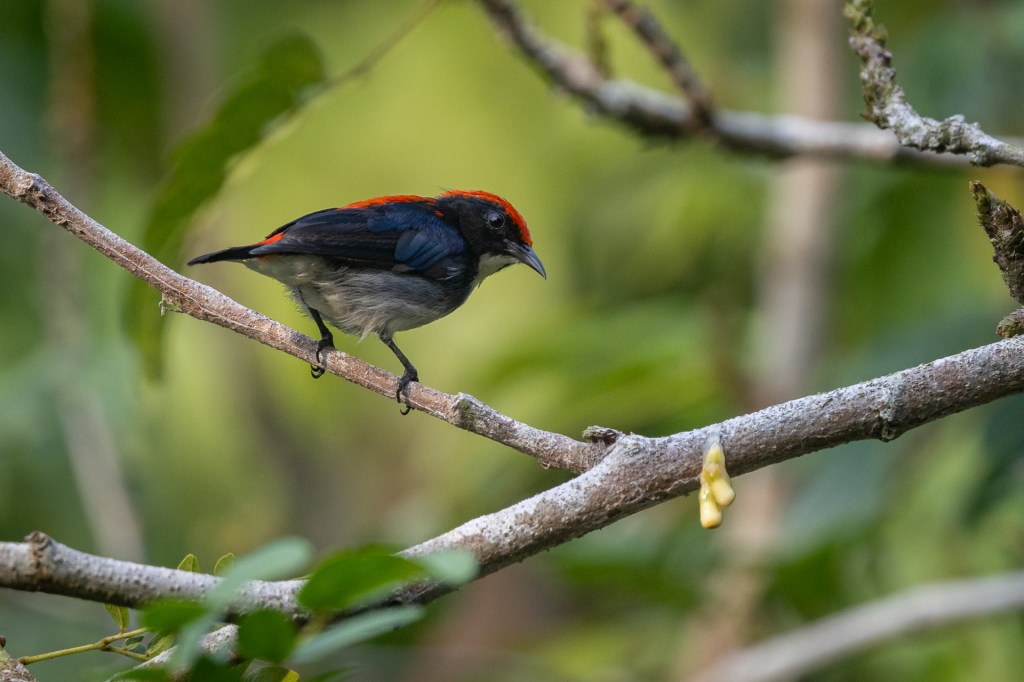
The first bird of interest I spotted was a pair of Scarlet-backed Flowerpecker calling and foraging. These beautiful little birds are always a joy to photograph provided they stay still.
Scarlet-backed Flowerpecker
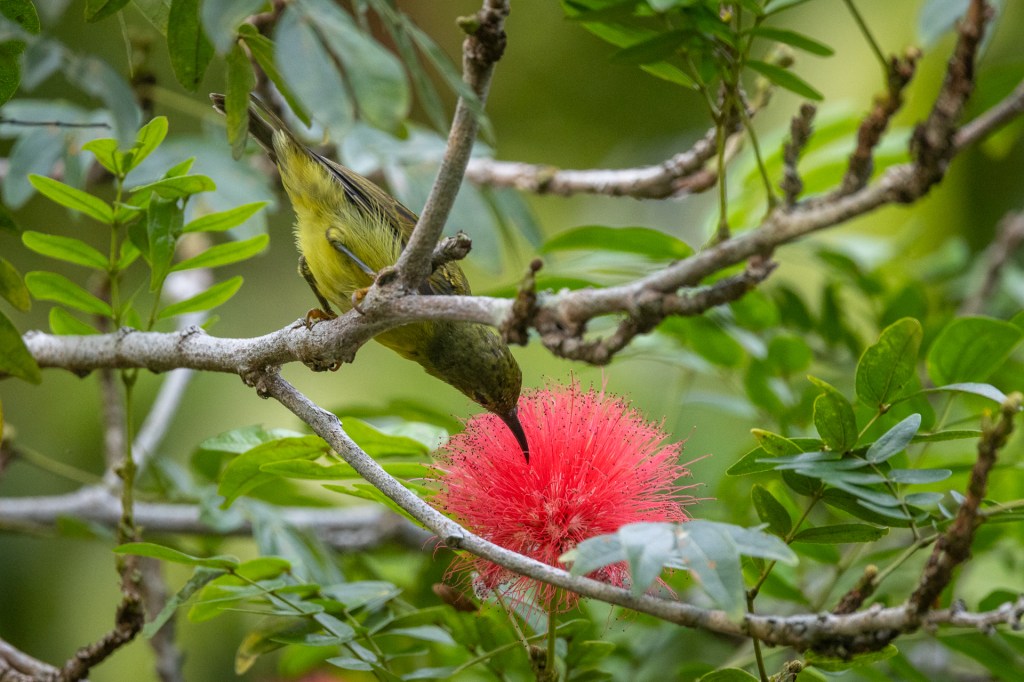
On the same plant was a lone female Brown-throated Sunbird busy feeding on a flower. It didn’t mind my presence too much as I tried to find a better angle to photograph it amongst the congested leaves and branches.
Brown-throated Sunbird
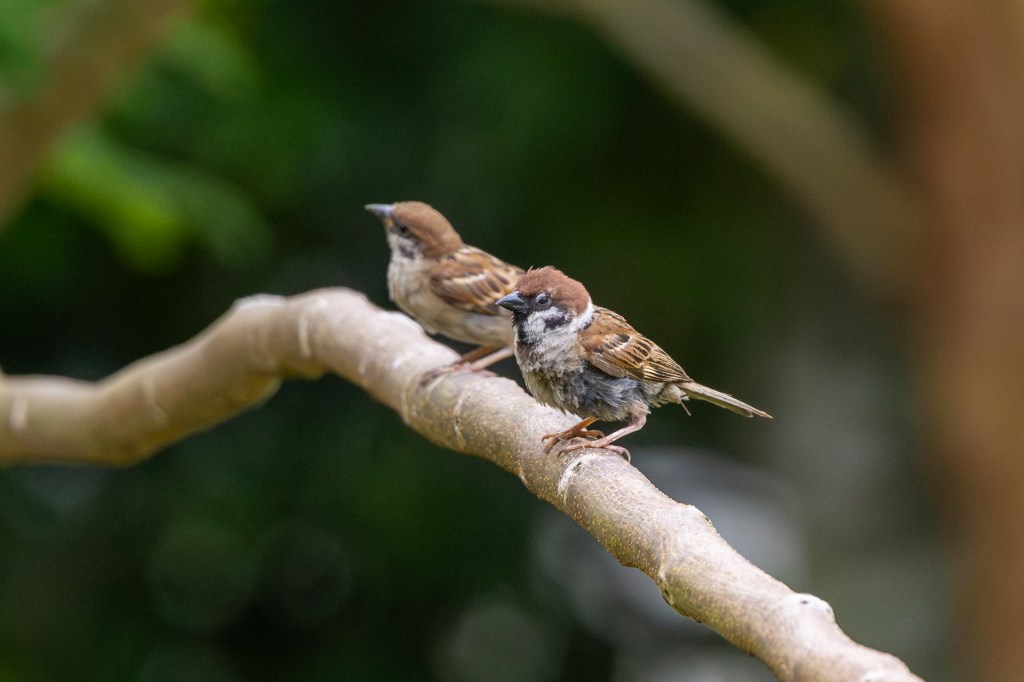
This was the first time I’ve spotted a flock of Eurasian Tree Sparrows in the middle of the park. I’ve always observed them on the fringes of the park perhaps to avoid the many Javan Mynahs that forage in the same area.
Eurasian Tree Sparrow
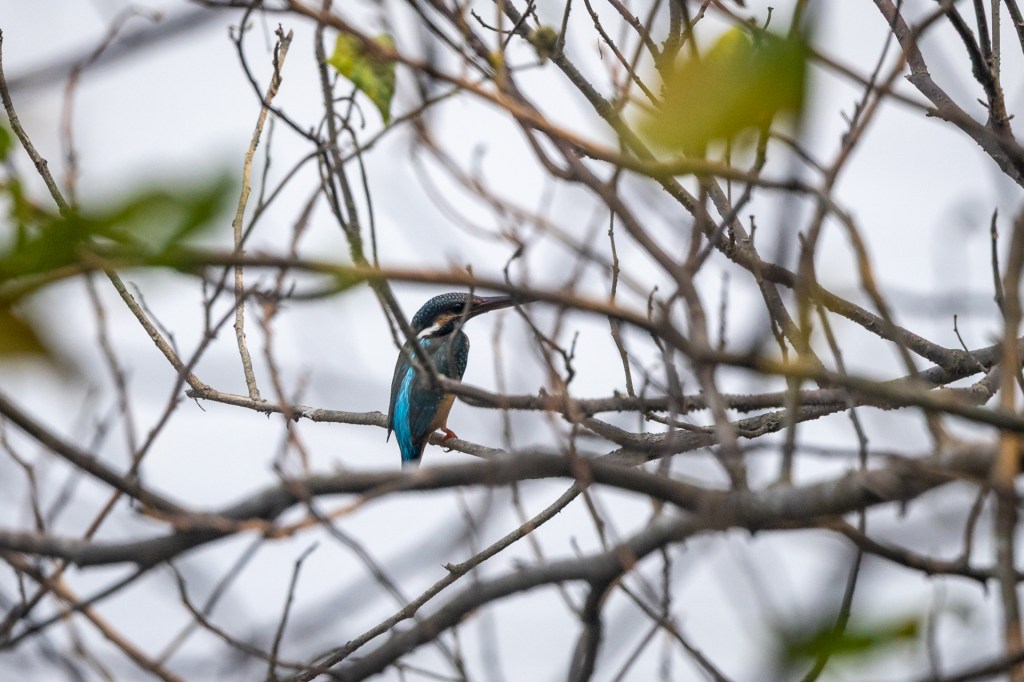
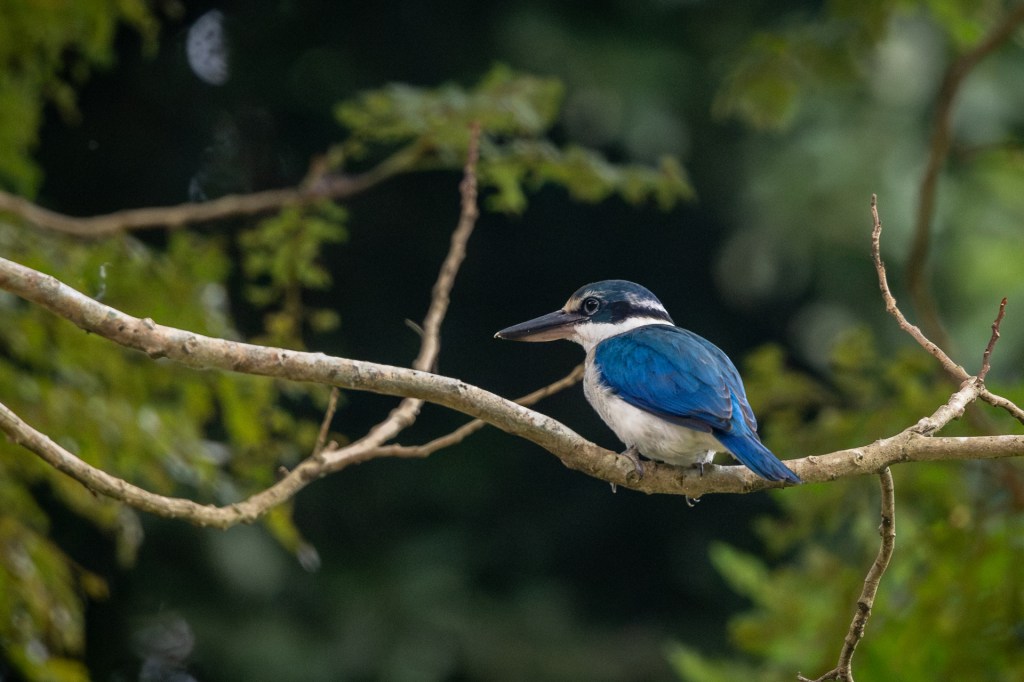
Lastly, I spotted a pair of Collared Kingfisher swoop down to the ground to catch an insect. Unfortunately, the action happened too fast for me to capture a meaningful photograph so here’s a shot of the bird post-meal.
Date: Oct 2023 to Mar 2024, Nov to Dec 2024 Location: Bukit Gombak Park
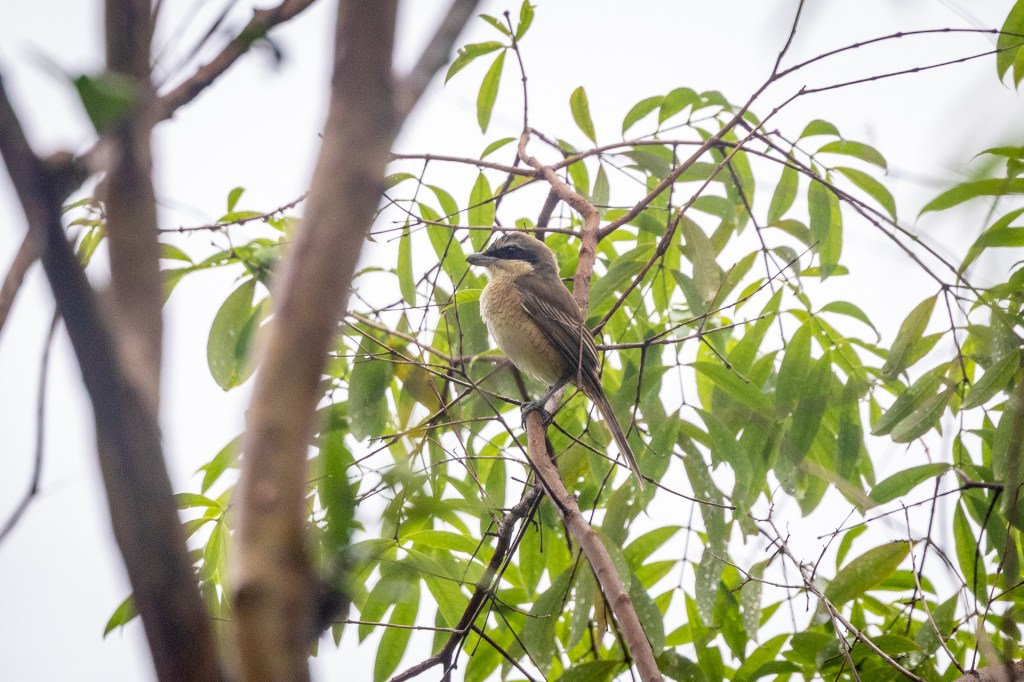
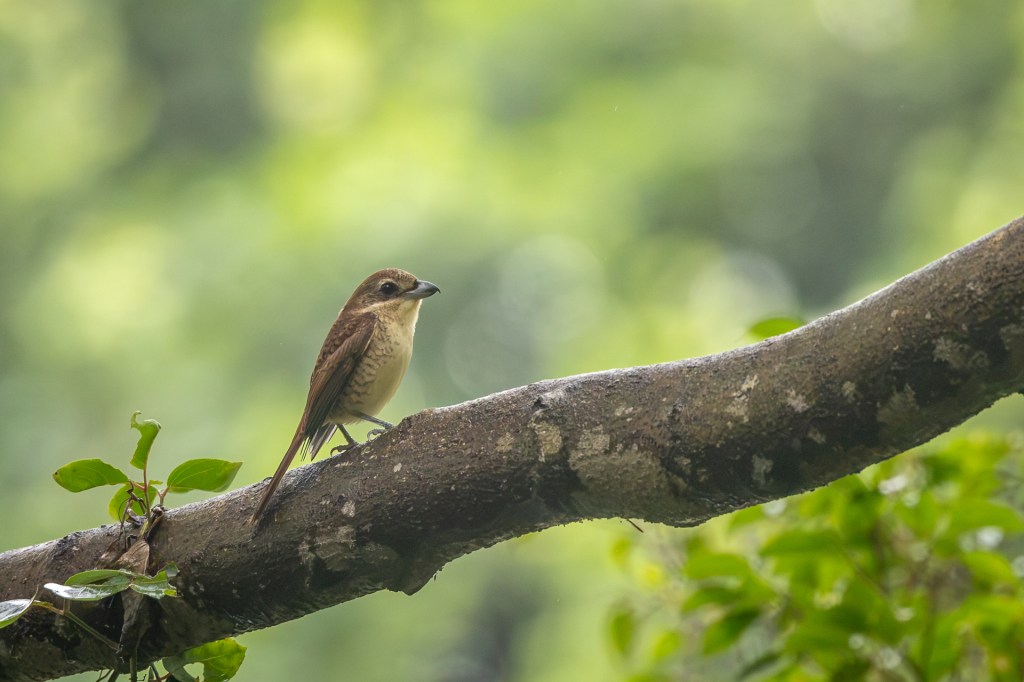
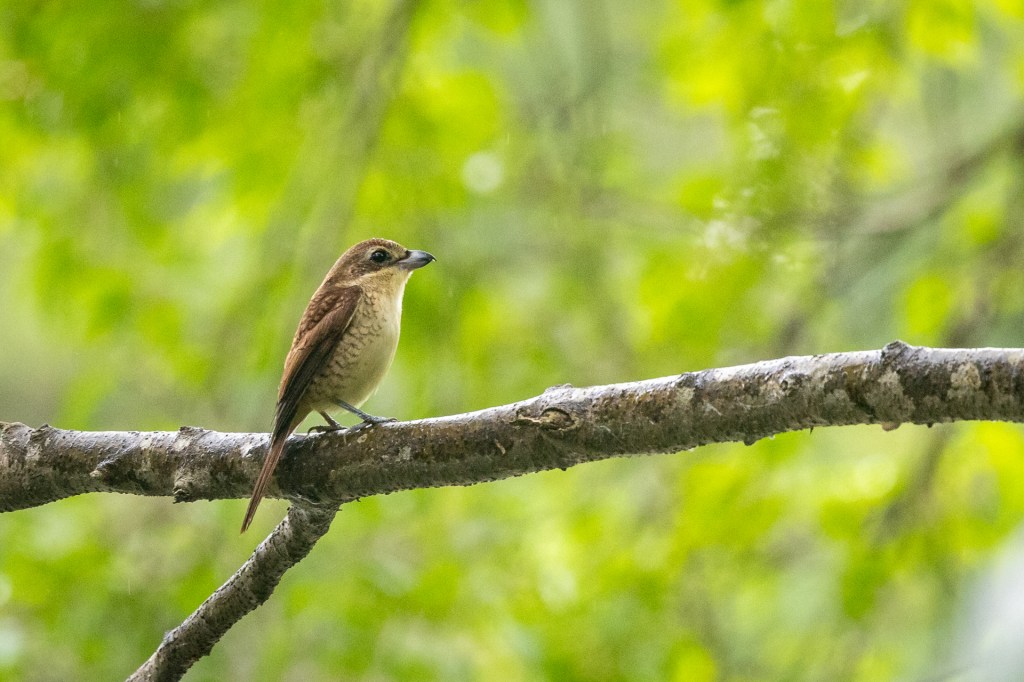
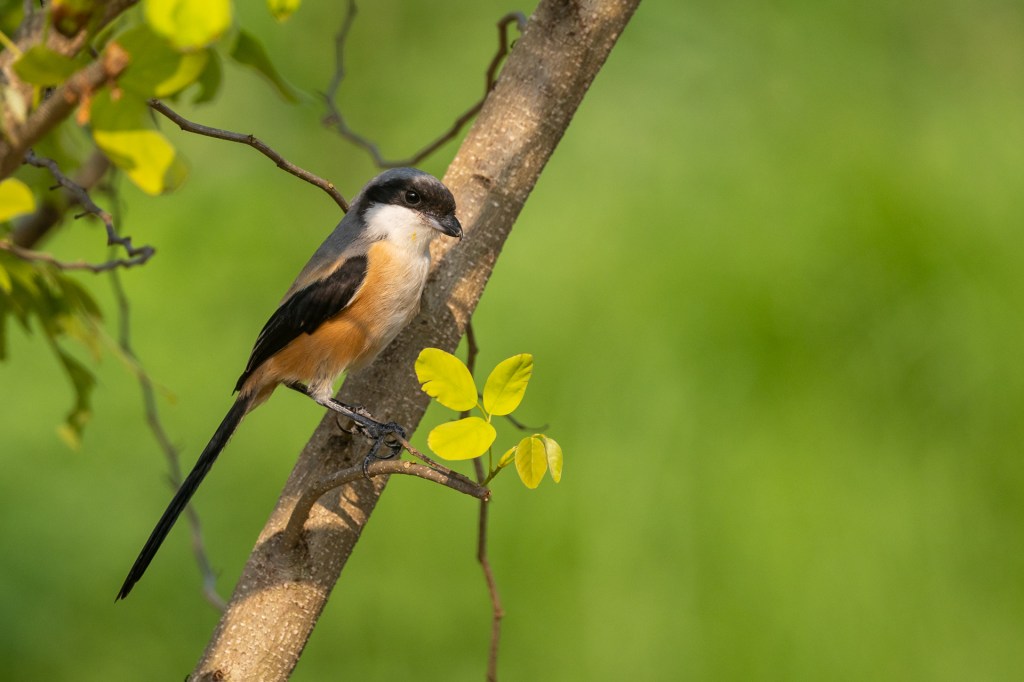
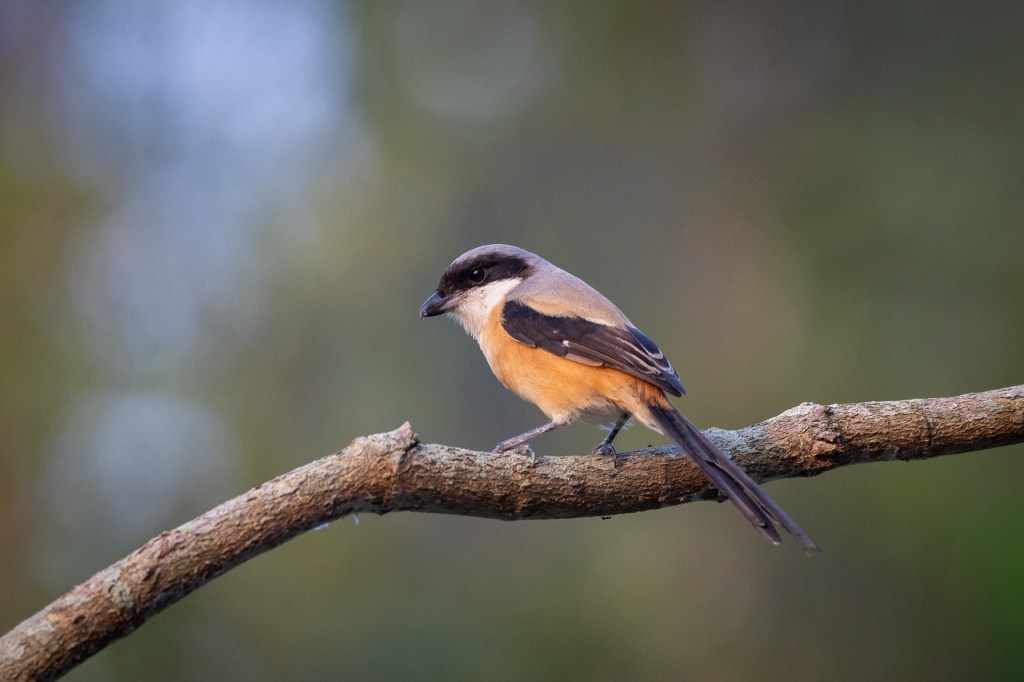
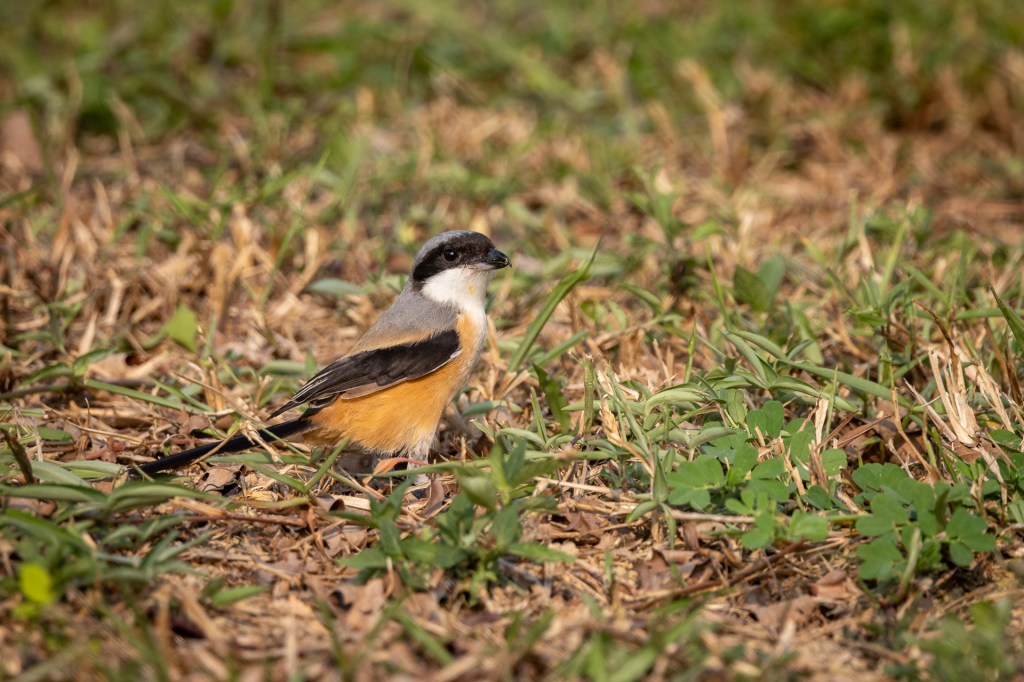
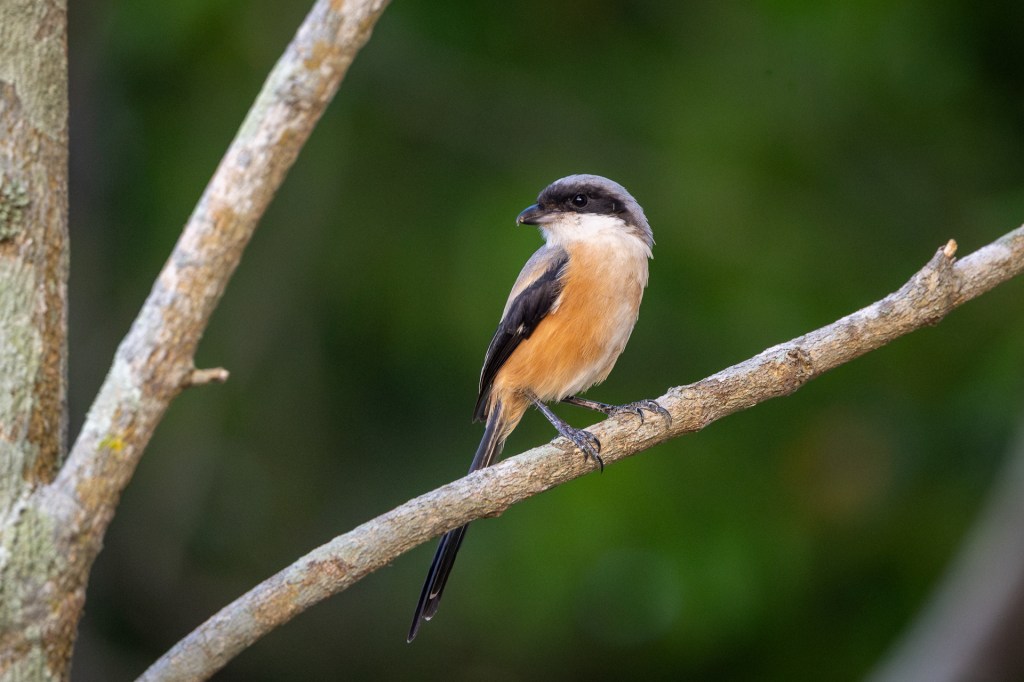
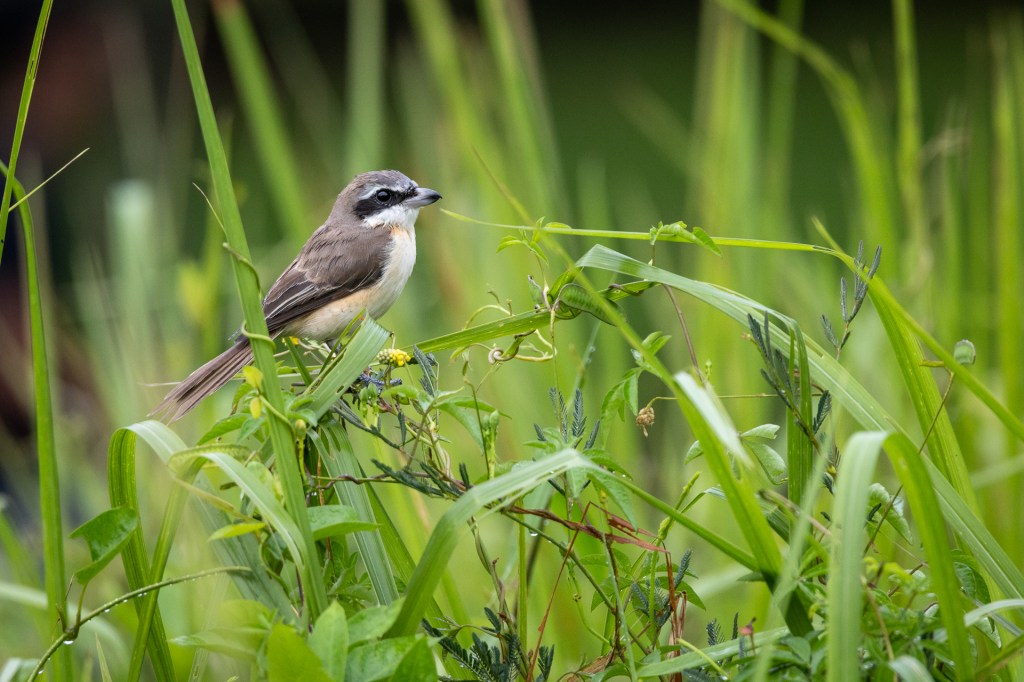
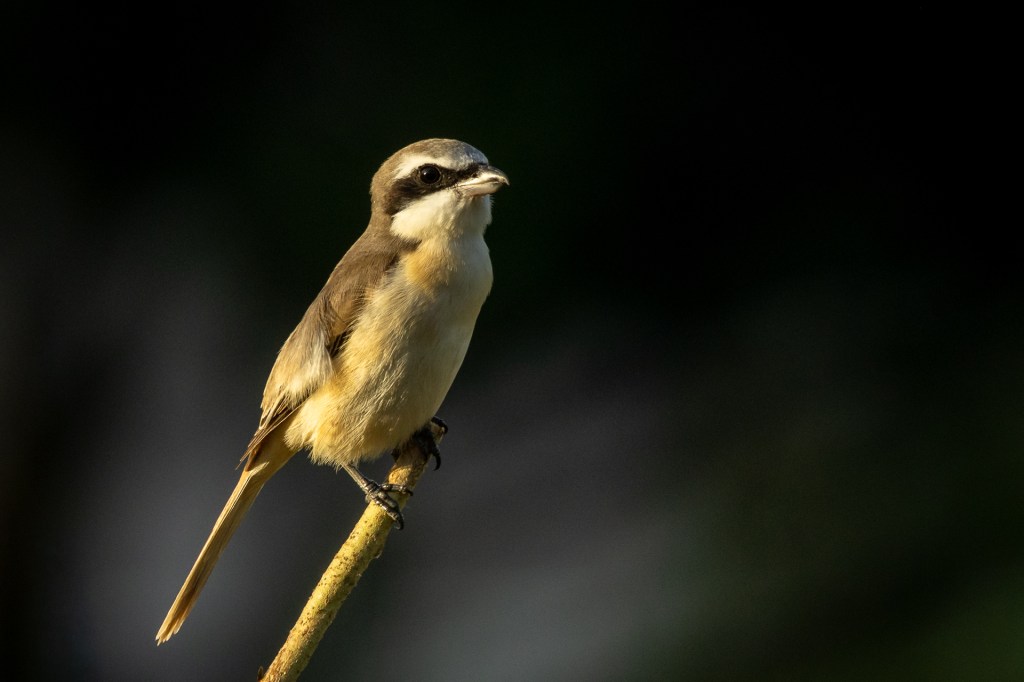
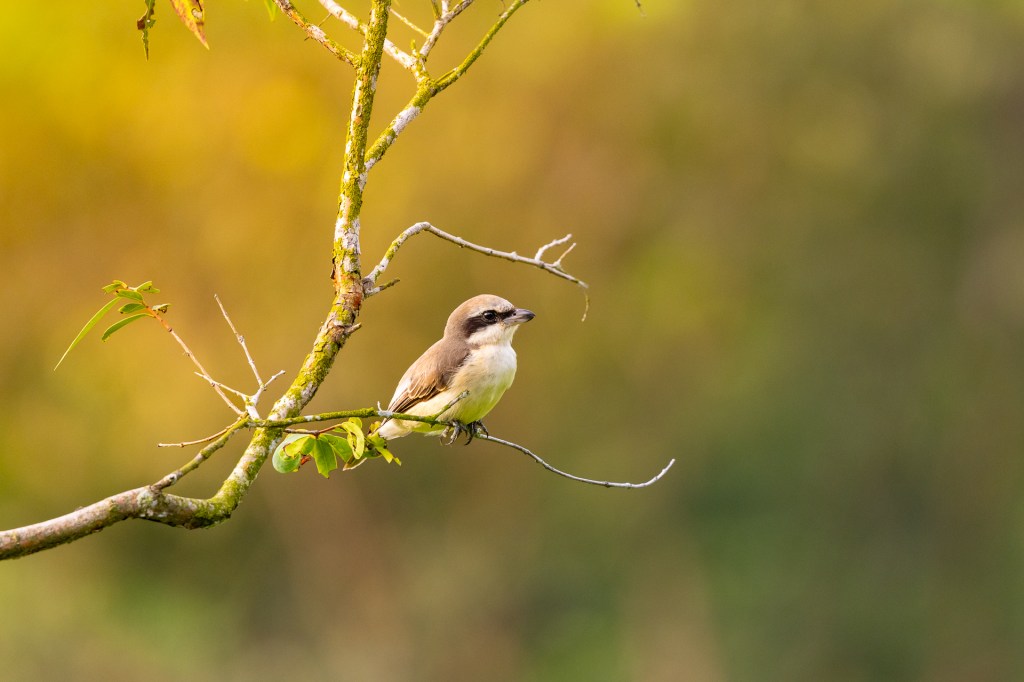
Over the winter migration seasons of 2023 and 2024, I would frequent my “backyard” Bukit Gombak Park to photograph a lone wintering Brown Shrike.
Brown Shrike (taken in 2023)
I do not know if they are the same bird across both years. But I assumed they are since both were not skittish and allowed me to photograph them at a relatively close distance.
Brown Shrike (taken in 2024)
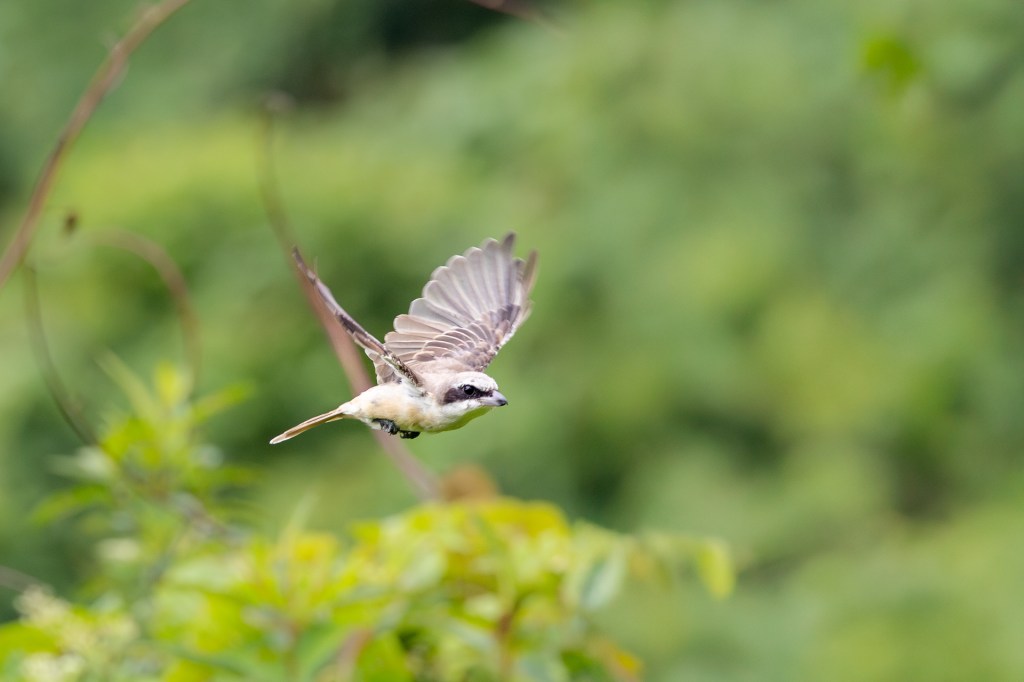
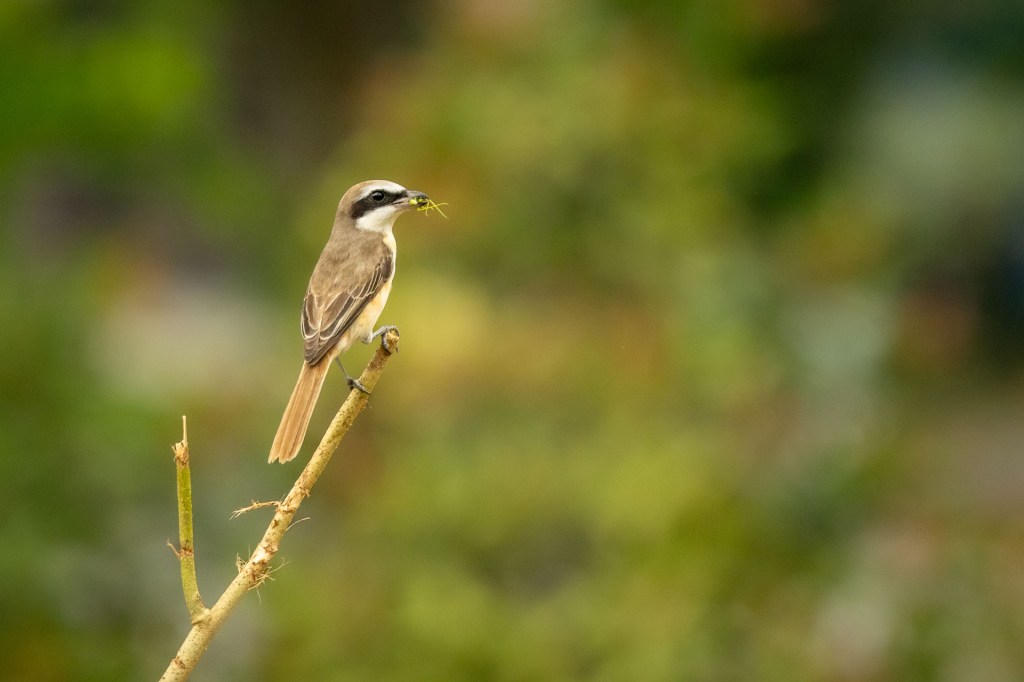
I managed to get many photographs of the bird during that time including a flight shot and pictures of it with various prey in mouth.
Brown Shrike in flight (taken in 2024)Brown Shrike with katydid(taken in 2024)
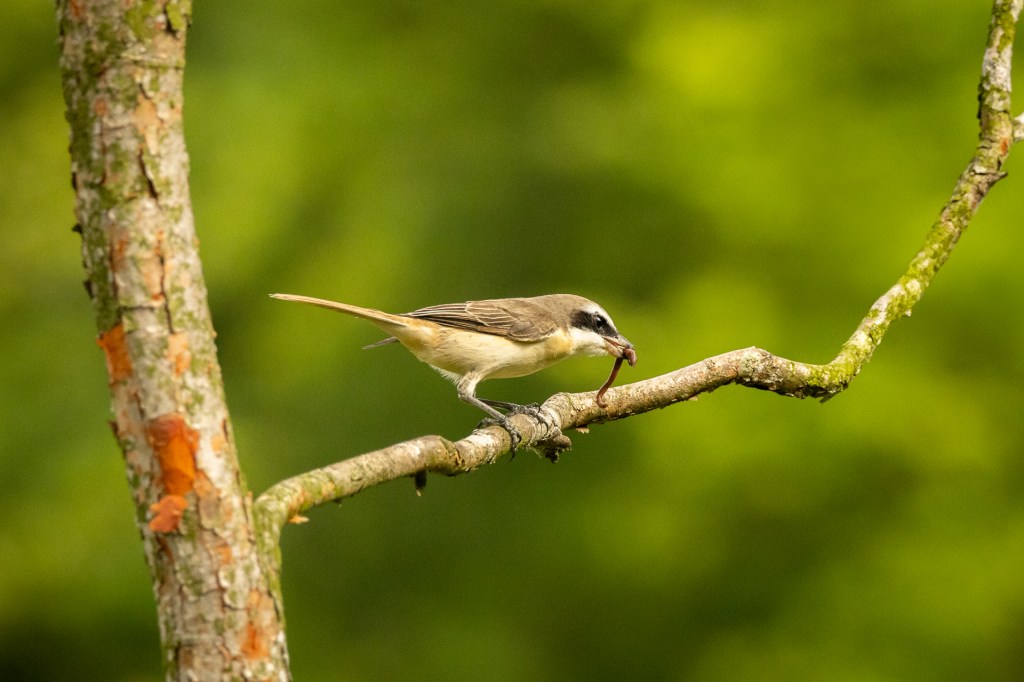
The most memorable encounter had to be the time I observed it pull an earthworm out of the ground before settling on it’s favorite perch to finish it’s meal. As a child, I’ve seen so many picture books of birds pulling worms out of the ground but witnessing it in real life is quite something.
Brown Shrike with earthworm (taken in 2024)
Unfortunately, I have not seen the bird in recent years. It may be wintering elsewhere but it’s also possible that it may have perished. Winter migration is a perilous journey and birds die for various reasons from predation, exhaustion to window strikes.
Brown Shrike (taken in 2024)
Wherever you may be, I hope you are in a better place.
I’ll be on hiatus from birding for a few weeks due to other commitments in life. Hence, I thought I’d blog about some past birding experiences prior to 2026 (before this blog was born). I’ll start with my first sighting of a rare species in Singapore.
Date: 25 Nov 2023 Location: Singapore Botanic Gardens (SBG)
It was my first time at SBG for birding. I remember arriving at the Eco Lake very early at 7AM. As I was photographing some Black-crowned Night Herons, two ducks flew in and landed on the surface of the lake.
Black-crowned Night Heron
This was about 1 month after I started birding. I was still learning to identify most of the common species seen in Singapore. I had assumed those ducks were Lesser Whistling Ducks, an uncommon species, but can be sighted reliably in some locations. I took a few photos and then just stood to watch them before they disappeared among some foliage.
Cotton Pygmy Goose
There was another photographer with me on that morning but we did not speak with each other. He had no interest in the ducks which reinforced my conviction that they must be Lesser Whistling Ducks. Any seasoned local birder must have seen them to death.
I went about my day after the birding session. When I arrived home in the evening, I used Merlin (a bird identification app) to identify what I’ve seen for the day. At that point, I realized the ducks I saw looked nothing like the Lesser Whistling Duck.
After going through the list of ducks that have been spotted in Singapore before, I identified them as a pair Cotton Pygmy Goose. I asked for further confirmation on the Bird Sightings Group in Facebook and was given the affirmative. I was asked to submit an official sighting to the Bird Society of Singapore.
Cotton Pygmy Goose
Only then did I realized how incredibly lucky I was that morning. My sighting was only the 7th recorded sighting of the bird in Singapore. If I ever wanted proof of beginner’s luck, here it was staring me in the face. My only regret was not realizing the gravity of the situation earlier.
The extremely hot weather the day before kind of turned me off from going birding in the morning. So I decided to just go for another session of casual birding at my “backyard”.
Common Iora
Today I observed a Collared Kingfisher regurgitate a pellet of undigested food for the first time (this is a normal behavior). Unfortunate that I could not get a photo when the pellet was expelled.
Collared KingfisherCollared Kingfisher
The other first time is spotting a White-bellied Sea Eagle perched high atop a tree. I’ve seen them fly-by a few times but never perched on this tree. It didn’t stay for long before taking off.
White-bellied Sea Eagle
I’m glad that I’m still seeing “first times” here despite having birded here so many times (this is my 56th eBird checklist for this location).
I was planning to bird at the breakwater along Marina East Drive. However, things did not go according to plan as I was not aware there was an ongoing late opening of the MRT on Saturday mornings. So I detoured to bird at the Marina Grove pond instead.
Marina Grove pond (on a very hot day)
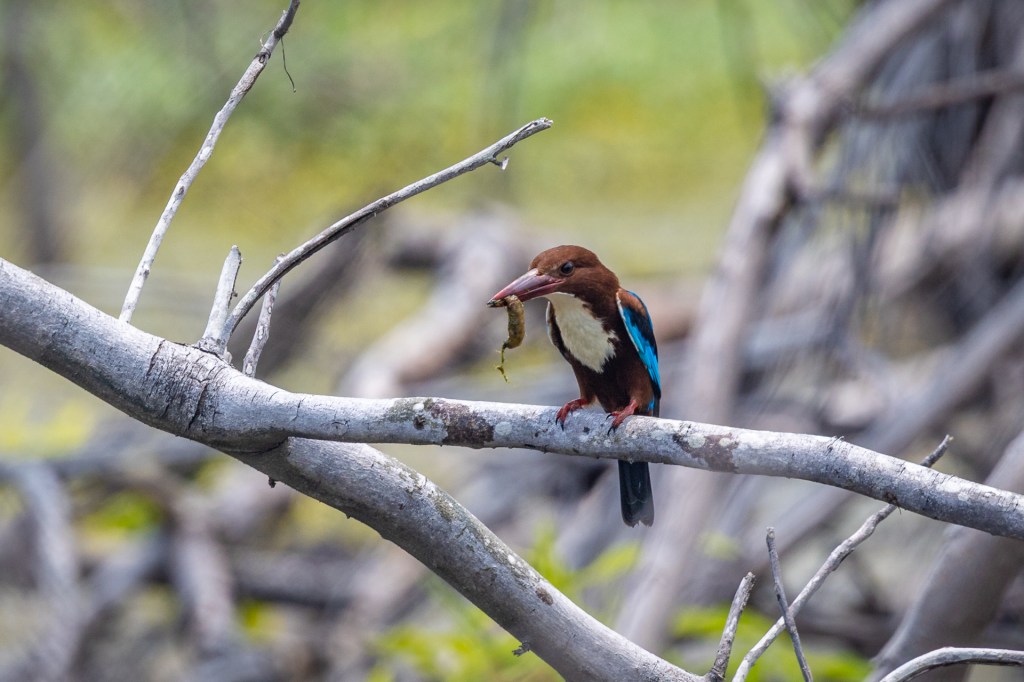
It was a really hot day. But this White-throated Kingfisher was hard at work looking for breakfast.
White-throated Kingfisher
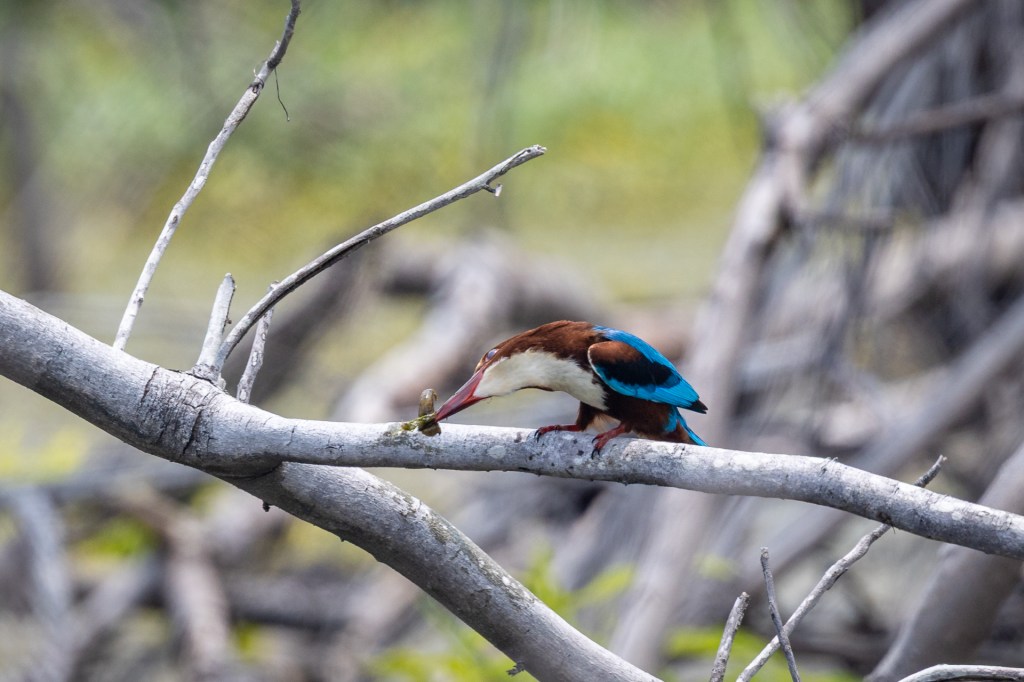
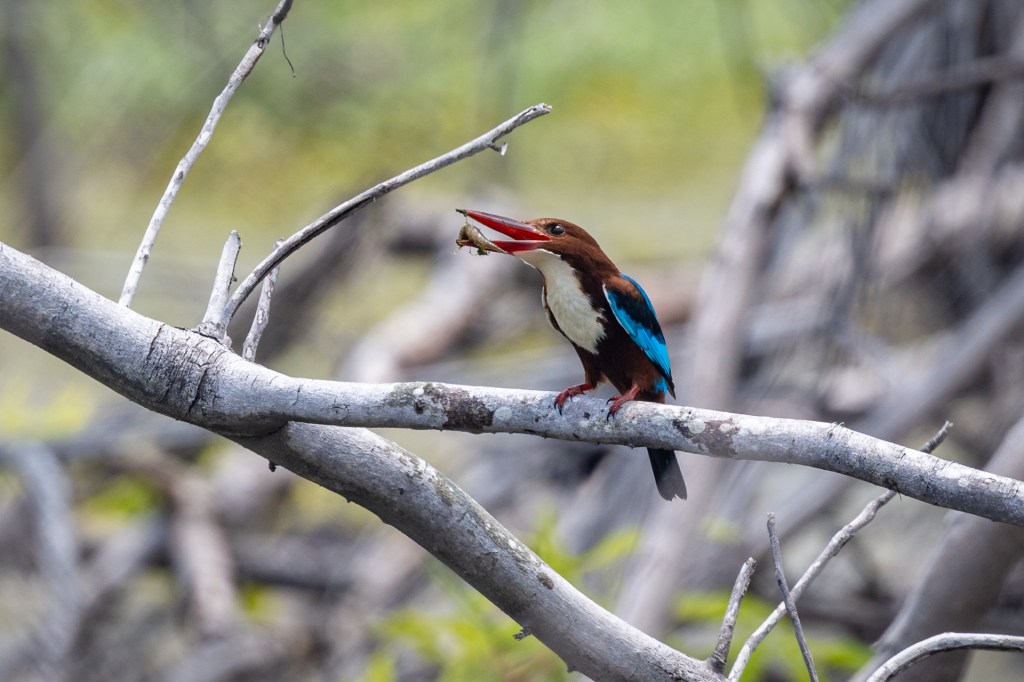
After awhile, it swooped down and deftly caught an insect larvae off the surface of the water.
White-throated Kingfisher
I seem to keep running into the Scaly-breasted Munia while birding. Though this time, it was in a different environment. They are usually seen in grassland habitats and feed on grass seeds. But this bird seems to be feeding on algae instead.
Scaly-breasted Munia
This Scaly-breasted Munia looked like it was eyeing a passing dragonfly with curiosity.
Scaly-breasted Munia
The Common Waxbill is another African native species that had been introduced into Singapore. I’ve seen them a few times now around the Marina Bay area.
Common Waxbill
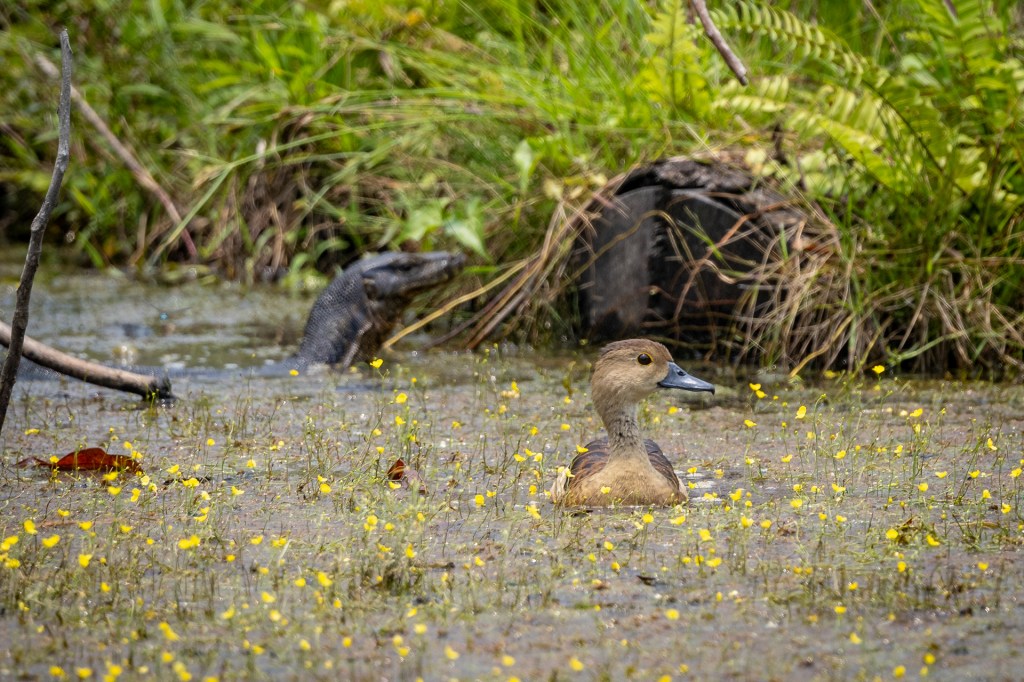
The Lesser Whistling Ducks seem to have really settled into this pond. I spotted a total of 7 ducks that morning.
Lesser Whistling Duck
The weather was really punishing that day and there is hardly any shade in the area so I left around 10AM. On the way home, I dropped by the National Library for the Festival of Biodiversity event.
Metal pins merchandise from the Bird Society of Singapore
I visited the Bird Society of Singapore booth to pick up some metal pins that I’ve ordered online. They look really nice and I’m still torn between pinning them on my camera bag or leaving them at home for safekeeping.
Today I’m going to take another shot at finding the Barred Eagle Owl along Jalan Asas leading up to Singapore Quarry. I arrived as early as I possibly could before 7AM to scan the area but did not see or hear anything of interest.
At the quarry, the resident pair of Gray-headed Fish Eagles were perched monitoring the water for prey. Unfortunately, there was no diving action that morning.
Gray-headed Fish EagleGray-headed Fish Eagle
The Stork-billed Kingfisher is another commonly seen resident at the quarry that will dive for fish. But again, no action today.
Stork-billed Kingfisher
Here’s an Olive-winged Bulbul singing it’s heart out before the rain came. Thankfully there’s a shelter at the quarry which allowed me to wait out the rain.
Olive-winged Bulbul
On the way out, this humble Eurasian Tree Sparrow showed me it was capable of catching a grasshopper for lunch.
It’s a public holiday today so let’s go for some “overtime” birding. I decided to try my luck again at Jurong Lake Gardens for the Barred Buttonquail. But I’m just going to preface this post that it was another fruitless attempt for the target bird.
Scaly-breasted Munia
Nevertheless, there are still plenty of other resident birds to see. Starting with the Scaly-breasted Munia which is commonly seen in the grassland area.
Scaly-breasted Munia
The Zitting Cisticola is another commonly spotted grassland species. This one caught a grasshopper for breakfast.
Zitting Cisticola
Next, I spotted a juvenile Oriental Magpie Robin. It flew from tree to tree following it’s parents around to look for food.
Oriental Magpie Robin (juvenile)
I finally spotted the Lesser Coucal which I’ve heard calling on multiple past visits.
Lesser Coucal
I also spotted the Watercock at Alstonia Island again. Quite surprised it was still around as it is a migratory visitor. Unfortunately, I could not snap a photo before it disappeared into some bushes. So here’s a photo of the White-breasted Waterhen instead.
White-breasted Waterhen
Of course, I can’t miss out on the Sunbirds. They are always fun to photograph (as I’ve mentioned many times in past posts).
Ornate Sunbird
In the evening, I decided to end the day with some casual birding at Bukit Gombak Park. It was a hot, sunny evening and In the far distance, I could see a raptor thermalling to gain altitude. Through the camera, I can see it’s a Changeable Hawk Eagle which is a first for me at Bukit Gombak.
With the migration season winding down, there are not many rarities to chase so I usually work on finding rarer resident birds. I decided to try another shot at finding the Barred Buttonquail at Jurong Lake Gardens (last spotted in Jan 2026 based on eBird).
Ruddy-breasted Crake
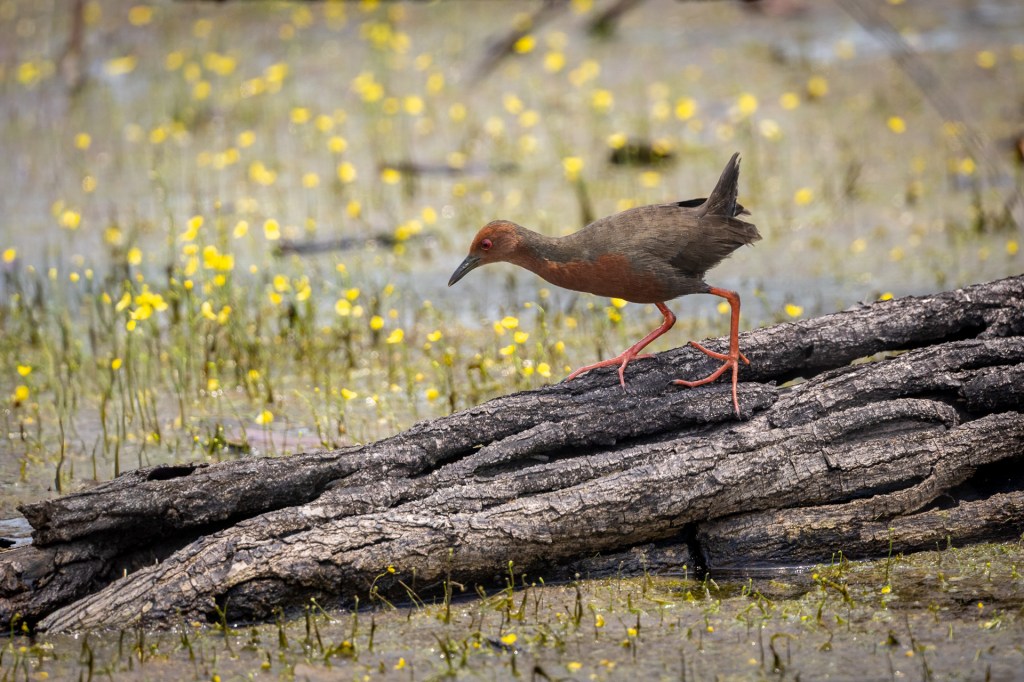
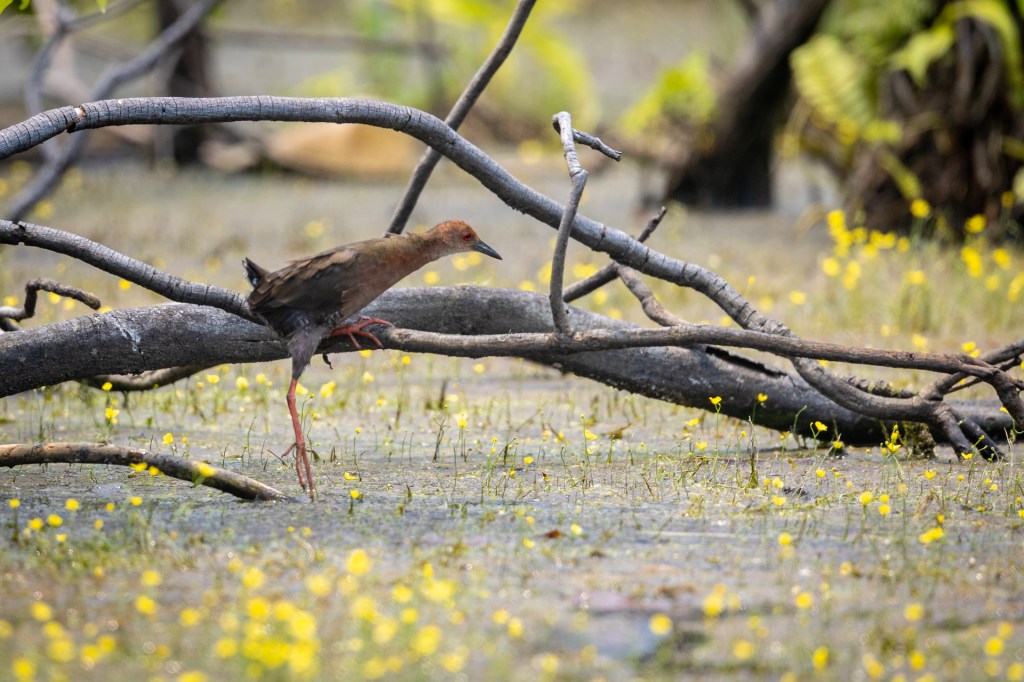
The key is to arrive very early in the morning when the birds are more likely to come out from the tall grass to forage in the open. Reaching the grassland area around 7AM, there were some Slaty-breasted Rail and Ruddy-breasted Crake foraging in the open but no Quail. This Rail was so pre-occupied with foraging it did not notice my presence.
Slaty-breasted Rail
As I wandered around the area, I spotted a flock of Javan Munia. This pair was preening each other – an activity where the birds help each other to clean the feathers around hard-to-reach areas of the face and head.
Javan Munia
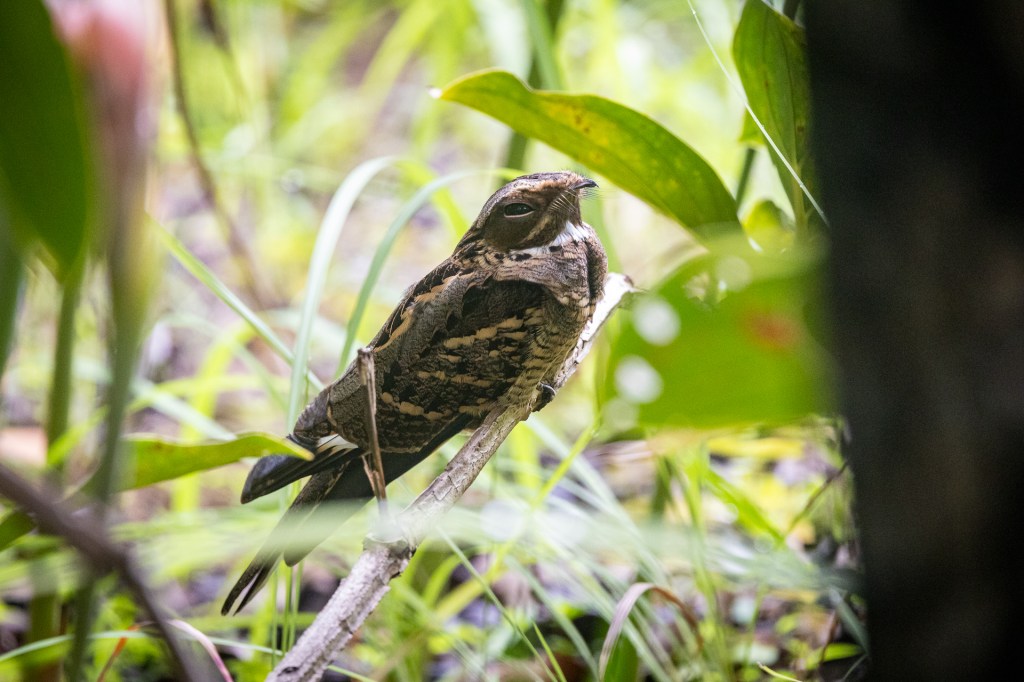
As the day drew on, I decided to give up on the Quail and move on to other parts of the park. There is a patch of greenery near the allotment garden area which I have consistently spotted the Large-tailed Nightjar. Today did not disappoint as there were two in the area.
Large-tailed Nightjar
Sunbirds are always fun to photograph as they fly from flower to flower feeding on nectar in the late morning. Usually, they’re usually quite tolerant of human proximity when feeding.
Then the weather turned and it started to rain. It looked like a passing shower, so I decided to wait it out at a sheltered area. No such luck for this Lineated Barbet though that got drenched in the rain.
I was looking at my eBird stats and noticed I’m on 299 species sighted on my life list. What will help me hit the big 300? Based on sightings reported on social media, I had several options. I decided to head to SBWR to try my luck at seeing the Black-and-red Broadbill.
Unfortunately, after waiting in the morning the bird was a no-show (not yet at least) but I had to leave. So, the 300th species remained abegging. The following weekend I will be in Malaysia so there’s still a good chance of finding something special to hit the big 300.
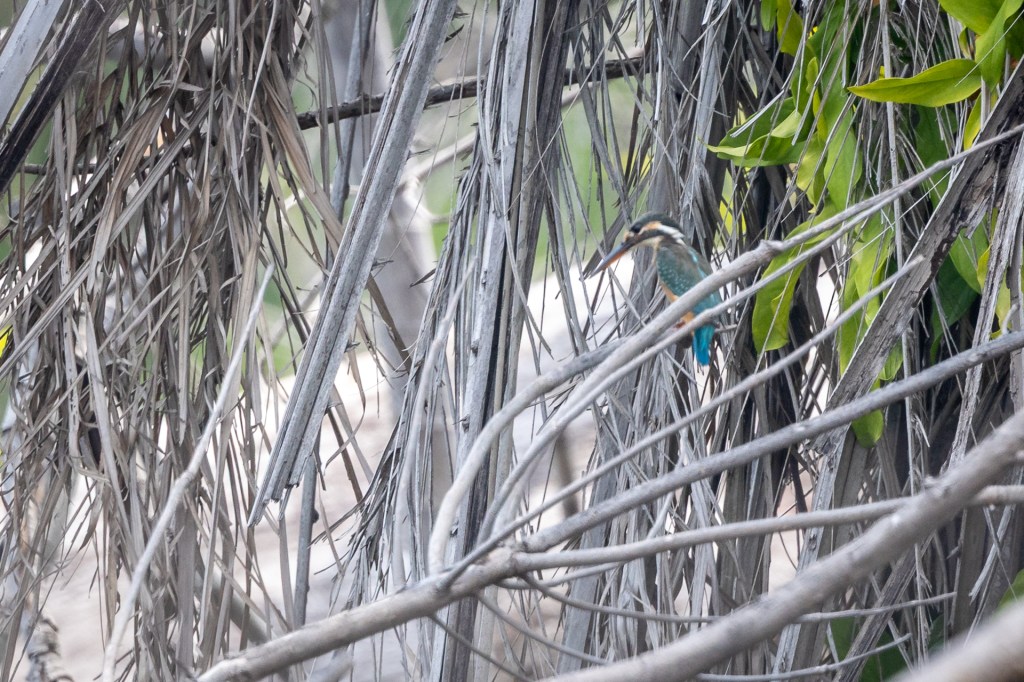
It wasn’t a wasted day though. I saw the Blue-eared Kingfisher which is always a joy to see.
Blue-eared Kingfisher
Up in the sky, a Brahminy Kite was seen pursuing a Crested Serpent Eagle which intruded its airspace.
As I was making my way out, I saw this huge Saltwater Crocodile basking on the riverbank. I took some photos and didn’t give it much thought.
Saltwater Crocodile
When I got home and processed the photos on the computer, I noticed there was a Green-crested Lizard resting on the head of the crocodile. How the heck did it get there?!
Today, I am birding at Hampstead Wetlands Park. This location was one of the first that I visited when I started birding in 2023. However, I have not been back since because it is a pain to travel here without a car. Nevertheless, I am here today to see the Cinnamon Bittern (CB).
Hampstead Wetlands Park
Arriving at 6:50AM, I immediately set up my gear to wait for any signs of the CB on the other side of the pond. It didn’t take long before the CB suddenly sprung out from the tall grass and landed on some bushes. Thankfully, there was a small opening to get some photos.
Cinnamon Bittern
After a short while, the CB flew along the pond and disappeared once again into the tall grass from where it came. This time, I managed to get some flight shots of the CB which I’m really pleased with.
Cinnamon Bittern
I observed a pair of Oriental Pied Hornbills hawking for insects by launching themselves from a perched position to catch prey in the air. This is the usual feeding technique of Bee-eaters and Flycatchers, but it is the first time I’ve seen Hornbills do this.
Oriental Pied Hornbill
Even the Yellow-vented Bulbuls were having success catching insects for breakfast. Is there a high concentration of wasps or other insects in the area?
Yellow-vented Bulbul
Meanwhile, the resident Buffy Fish Owl was perched on its usual tree scanning for prey.
Buffy Fish Owl
The call of the Violet Turaco (VT) from a nearby tree attracted a group of birders to track it down. This individual had been spotted in the area since 2025. It is very likely an escapee from an aviary or pet trade because it is not naturally found in this part of the world (they are from Africa).
Violet Turaco
Besides that, some raptors were also spotted. First was the Crested Goshawk which was seen soaring in the air as it startled a flock of Asian Glossy Starlings which took off to escape.
Crested Goshawk / Asian Glossy Starlings
Next raptor was the Crested Honey Buzzard. It circled in the sky slowly gaining elevation before disappearing into the distance.
Crested Honey Buzzard
Lastly, I noticed a pair of Ornate Sunbirds that kept perching on a log in the middle of the pond. On closer inspection, there was a nest to the side of the log, but I could not see if there were any chicks inside.
Ornate Sunbird
With that, I have finally seen all four species of Bitterns that occur in Singapore (Yellow, Cinnamon, Black and Von Shrenk’s).